

Batteries are found everywhere these days: Phones, laptops, cars, emergency power—all essential applications. They are a necessity. Whether you’re a hobbyist storing power packs for a drone or a prepper stockpiling emergency supplies, improper storage will silently kill your battery, leading to reduced capacity and life.
Squeezing out a battery’s maximum lifespan is helped by understanding one crucial fact: storage requirements are entirely dependent on the internal chemistry. You shouldn’t treat a Lithium-ion battery the same way you’d treat the Alkaline AAs we toss in our junk drawers.
Before we look into the specifics of Lead Acid, Nickel, and Lithium-ion, let’s establish the two universal storage commandments that apply to nearly every battery.
Universal Storage Commandments: Temperature and Environment
If you have just one takeaway from this article, it’s this: Batteries really do not like heat.
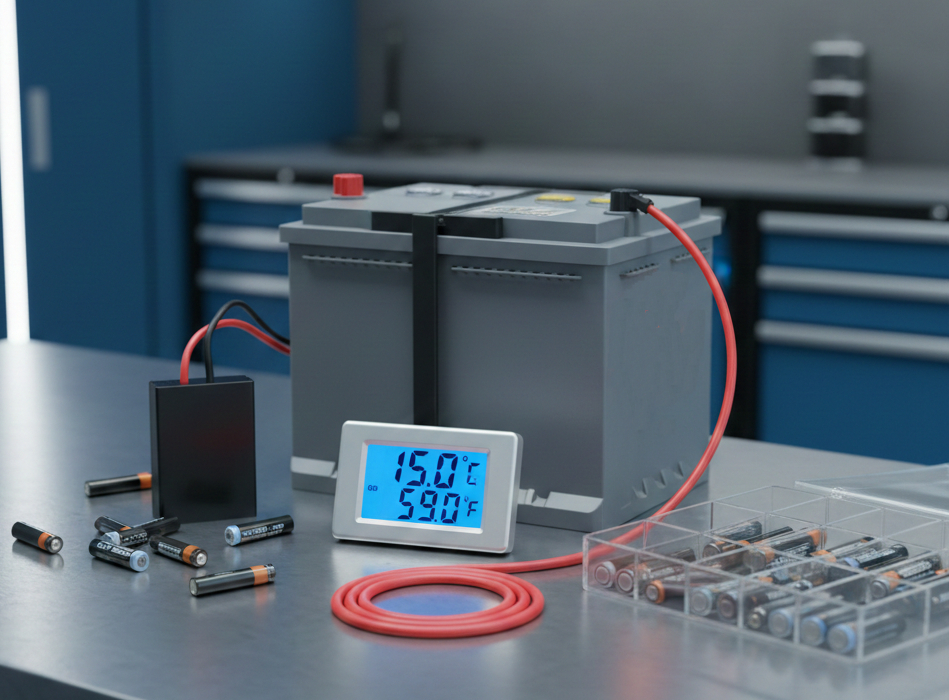
The ideal storage temperature for most battery chemistries is around 15°C (59°F). As the temperature rises, the rate of capacity loss increases. Storing a battery, especially a Lithium-ion one, in direct sunlight on a car dashboard or near a heater will speed this up. This is a reason why newer phone models have an “Adaptive Charging” feature—the slower charge keeps the battery’s temperature lower.
On the other hand, also avoid freezing the battery. A deep cold may change its molecular structure.
The final step is controlling the surrounding environment. Crucially, the storage location must be dry. If you can, remove batteries from their equipment. Once physically taken out of the device, the battery will have fewer chances for discharging or leaking (ex. a power draw from the device itself). Regardless, you should store batteries in a place with a stable temperature and low humidity.
Lithium-ion (Li-ion): State-of-Charge Optimization
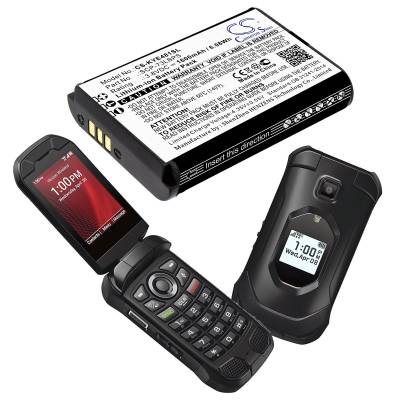
Lithium-ion batteries are very common in modern electronics. They are also more sensitive with regard to their charge levels. It’s important to know that you should:
- NOT store fully charged (at 100%): This high voltage places unnecessary stress on the cell, leading to capacity loss.
- NOT store fully discharged either (0%): This is the bigger problem.
The sweet spot for Li-ion is between 40 to 50 percent State-of-Charge (SoC). Storing at this charge minimizes capacity loss.
If you have precise digital voltage-reading tools, the target is an OCV (Open Circuit Voltage) of 3.82V per cell at room temperature. To ensure a correct reading, rest the battery for 90 minutes.
The Li-ion Danger Zone
The most important warning for Li-ion is the voltage floor. If a cell dips below 2.0V, copper shunts may form inside the cell. These internal faults lead to elevated self-discharge or even a partial electrical short, leaving the battery unstable and potentially dangerous upon recharging. For safety, this is why aviation authorities mandate that all removable Li-ion packs ship at a low charge (typically 30% SoC), as fully charged batteries are more volatile if an anomaly occurs.
Lead Acid: The Need for Monitoring
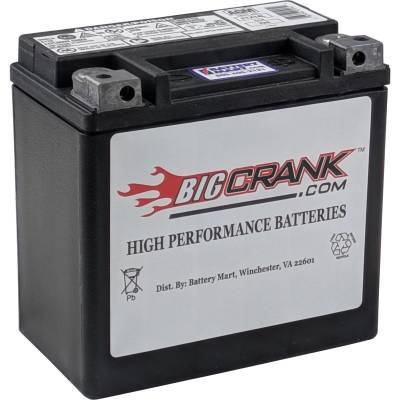
Lead acid batteries (found in cars and deep-cycle applications like UPS backups) are different. They must be stored charged, and then regularly monitored.
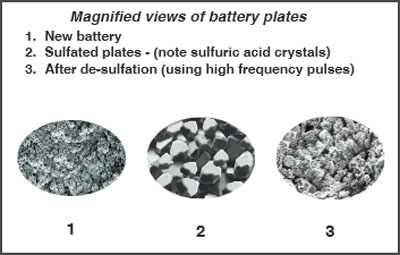
The common issue with a lead acid battery in storage is sulfation. If the battery remains in a low charge state for too long, an oxidation layer forms on the negative plate, inhibiting current flow and debilitating the battery’s ability to accept a charge. This can appear like a white powdery substance on the terminals. Inside, the battery will have grimy, discolored plates.
To prevent sulfation, recharge the battery at about 70 percent. For a 12V battery, that’s about 12.42V, or 2.07V per cell (12.6V-12.8V would be fully charged). Lead acid batteries, properly maintained, can be stored up to two years.
Regarding sulfation: A sulfated battery may be reactivated by applying an elevated voltage. However, this is an advanced procedure. Do not attempt to perform this service if the power supply does not have current limiting.. There are also chargers with desulfation features to attempt to reverse this effect.
Nickel-Based (NiMH & NiCd): The Resilient Options
Nickel-based batteries (Nickel-Metal Hydride and Nickel-Cadmium) are much more resilient than Li-ion.
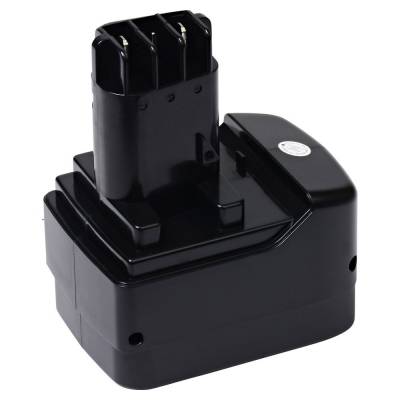
The storage charge level is not critical for this chemistry. While storing them at around 40 percent SoC is recommended for quick reuse, they can be stored in a fully discharged state with no permanent side effects. Both chemistries boast impressive longevity, with Nickel-metal-hydride typically storing well for 3–5 years.
The capacity drop that occurs during prolonged storage is largely reversible. After storage, these batteries may require what’s called priming to recover their maximum capacity. All this means is to give it a full charge/discharge cycle. You might’ve heard this called “memory effect”, where the battery “remembers” a shorter charge cycle.
Read more about memory effect: Understanding NiMH and NiCD Batteries
Primary Batteries: The Low-Maintenance Non-Rechargeables
Primary batteries (non-rechargeable Alkaline and Lithium) are low maintenance. The hold their capacity well, with many lasting up to 10 years in most scenarios. Store them at room temperature in a dry, dark place, and they’ll be fine. Despite some of the supposed battery “hacks” out there, don’t freeze or boil them (or any other battery type).
Your Battery Storage Checklist
To summarize the requirements for your battery vault:
| Chemistry | Ideal Storage SoC | Critical Storage Temperature | Key Action |
|---|---|---|---|
| Lithium-ion | 40–50% (approx. 3.82V/cell) | 15°C (59°F) | Must not drop below 2.0V/cell. |
| Lead Acid | Store full, monitor frequently. | 15°C (59°F) | Recharge when SoC drops to 70% (12.42V). |
| Nickel-Based | 40% (or fully discharged). | 15°C (59°F) | Requires priming (cycling) before reuse. |
| Primary (Alkaline) | 100% | Cool room temp. | Store in a dry, stable environment. |
By understanding the nuances between the different battery chemistries, you can maximize your battery’s life. With proper care, you’ll save money and avoid frustrating failures.
