

Lithium-ion batteries are powering more of our lives than ever before from motorcycles and power tools to smartphones, laptops, and even electric cars. If you’ve ever been curious what’s actually inside one of these batteries, this article is for you!
Whether you’re a hands on mechanic or just simply curious, this feature will give you a peek behind the power and help you better understand why lithium batteries are so efficient, lightweight and long lasting.
The Basic Structure of a Lithium-Ion Battery
When you’re holding a lithium-ion battery, it could be a lightweight block or a thin wafer-like piece with connectors. Inside, however, is a sophisticated piece of tech that’s made up of multiple internal parts:
A lithium ion battery may look like a solid block from the outside, but inside, it’s a sophisticated energy storage system made up of several key parts:
Cells (The Heart of the Battery)
Each lithium battery may contain multiple cells and each cell is a mini battery itself. The number of cells in the battery pack will depend on the voltage and capacity requirements of the device or vehicle. Each lithium-ion cell has a nominal voltage between 3.6V and 3.7V. If you have a 12V-equivalent lithium battery, it would be made from 4 lithium iron phosphate (LiFePO₄) cells that are connected end-to-end (known as ‘in series‘).
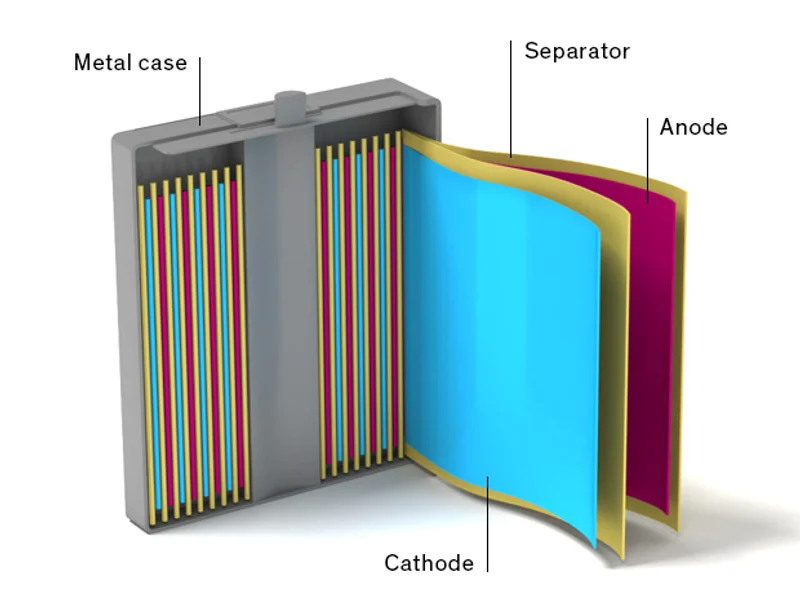
And, inside each of those cells from that 12V battery, there are a few key parts:
- Cathode (positive electrode): Usually made of lithium cobalt oxide or lithium iron phosphate.
- Anode (negative electrode): Often made of graphite.
- Electrolyte: A liquid or gel that allows lithium ions to move between electrodes.
- Separator: A thin layer that prevents the anode and cathode from touching and shorting out
How It Works
When you plug in a charger:
- Lithium ions move from the cathode to the anode.
- This process stores energy within the battery, ready to use.
When your device draws power from the battery:
- The ions flow back to the cathode, releasing the stored energy to power your device or vehicle.
This give and take of energy happens up to thousands of times over the battery’s lifespan. It gets energy from the charger, stored, and given to the device you’re using.
What Makes Lithium-Ion It Better?
Compared to traditional lead acid batteries, lithium ion options offer:
- Longer life (up to 10 years or more)
- Lighter weight (up to 70% lighter)
- Faster charging
- More efficient power delivery
- Low maintenance (no acid, no leaks, no corrosion)
No wonder people switch their motorcycles, solar systems, RVs and power tools to lithium!
Power your projects with Lithium Power Tool Batteries.
We offer a wide-selection of Lithium-Ion batteries for cordless drills and more.
Can You Repair or Rebuild a Lithium Battery?
You can, technically… but you should definitely think twice about that. Working on lithium batteries requires special tools, electrical knowledge, and an understanding of safety. Damaging or puncturing a cell causes a huge release of its stored energy, leading to fires or worse. That said, battery builders sometimes replace bad cells, repair a Battery Management System (BMS) or reconfigure a pack for custom voltage.
If you’re not experienced, it’s safer to replace a faulty battery or consult a battery specialist.
Final Thoughts: A Modern Power Marvel
The next time you turn the key on your motorcycle or fire up your cordless drill remember, there’s some real science packed inside that lithium ion battery. It’s one of the most powerful, efficient and advanced pieces of tech available to everyday DIYers.
Stay powered up with a smart lithium battery charger designed to safely charge and maintain Li-ion cells.
Ready to find your lithium-ion battery replacement?
At Battery Mart, you can find a huge selection of replacement lithium-ion batteries for many devices: Motorcycles, ATVs, power tools, and so much more.
